Investment risk tolerance sets the stage for this enthralling narrative, offering readers a glimpse into a story that is rich in detail and brimming with originality from the outset. Dive into the world of financial decision-making with a focus on risk tolerance.
Understanding the nuances of risk tolerance is crucial for making informed investment choices, and this guide will walk you through the key aspects of this fundamental concept.
Understanding Investment Risk Tolerance
Investment risk tolerance refers to an individual’s ability and willingness to endure fluctuations in the value of their investments over time. It is a crucial factor in determining the appropriate investment strategy for an individual.Assessing one’s risk tolerance before investing is essential to ensure that the chosen investment aligns with their financial goals and comfort level. By understanding how much risk one can handle, investors can avoid making impulsive decisions during market downturns.Risk tolerance plays a significant role in influencing investment decisions.
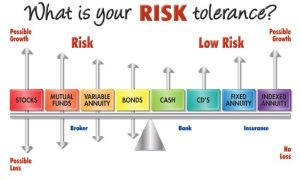
Investors with a high risk tolerance may opt for more aggressive investment options, such as stocks or cryptocurrencies, in pursuit of higher returns. On the other hand, investors with a low risk tolerance may prefer safer investments like bonds or mutual funds to protect their capital.
Factors Influencing Risk Tolerance
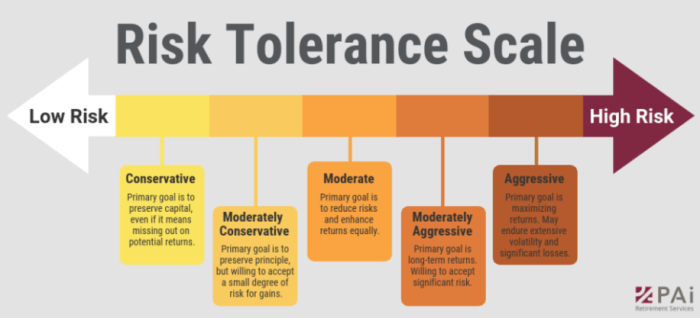
Factors influencing risk tolerance vary from person to person and can be influenced by a combination of personal and external factors. These factors play a significant role in determining how much risk an individual is willing to take when making investment decisions.
Age
Age is a crucial factor that impacts risk tolerance. Generally, younger individuals have a higher risk tolerance compared to older individuals. This is because younger investors have more time to recover from any potential losses and can afford to take on more risk in pursuit of higher returns.
Financial Goals
An individual’s financial goals also play a significant role in determining their risk tolerance. Those with long-term financial goals, such as saving for retirement, may be more willing to take on higher levels of risk in their investments to achieve greater returns. On the other hand, individuals with short-term financial goals may have a lower risk tolerance as they cannot afford to risk losing their principal investment.
Personality Traits
Personality traits, such as risk aversion or risk-seeking behavior, can greatly influence an individual’s risk tolerance. Risk-averse individuals tend to prefer safer, lower-risk investments, while risk-seeking individuals may be more inclined to take on higher levels of risk for the potential of higher returns.
External Factors
External factors, such as economic conditions, can also impact risk tolerance. During periods of economic uncertainty or market volatility, individuals may become more risk-averse and prefer safer investments. Conversely, during times of economic prosperity, individuals may be more willing to take on higher levels of risk in pursuit of greater gains.
Assessing Risk Tolerance
When it comes to investing, understanding your risk tolerance is crucial. Assessing your risk tolerance involves various methods to determine how much risk you are willing and able to take on in your investment strategy.
Risk Tolerance Questionnaires and Tools
Risk tolerance questionnaires are commonly used tools that help investors evaluate their comfort level with risk. These questionnaires typically ask about financial goals, time horizon, investment knowledge, and reaction to hypothetical scenarios to gauge an individual’s risk tolerance.
Risk assessment tools, on the other hand, are more quantitative in nature and may use algorithms to analyze an investor’s risk tolerance based on their responses.
Role of Financial Advisors
- Financial advisors play a crucial role in helping clients assess their risk tolerance. They guide individuals through the process of understanding their risk preferences and aligning them with their financial goals.
- Advisors use their expertise to explain the potential risks and rewards associated with different investment options, helping clients make informed decisions based on their risk tolerance.
- By working closely with clients, financial advisors can customize investment strategies that match their risk tolerance levels, ensuring a balanced portfolio that aligns with their financial objectives.
Managing Investment Risk
When it comes to managing investment risk, it is essential to align strategies with an individual’s risk tolerance to achieve financial goals effectively. This involves utilizing various techniques to minimize the impact of market fluctuations and potential losses.
Diversification and Risk Management
Diversification plays a crucial role in managing investment risk by spreading investments across different asset classes, industries, and geographic regions. This strategy helps reduce the impact of a decline in any single investment, leading to a more balanced and resilient portfolio.
- Diversification involves investing in a mix of assets such as stocks, bonds, real estate, and commodities to reduce overall risk exposure.
- By spreading investments across different sectors and industries, diversification helps mitigate the impact of market volatility and economic downturns.
- Investors can also diversify geographically by investing in international markets to reduce country-specific risks and take advantage of global opportunities.
“Don’t put all your eggs in one basket.”
Asset Allocation and Risk Tolerance
Asset allocation is another key strategy for managing investment risk, as it involves dividing investments among different asset classes based on an individual’s risk tolerance and financial goals. This approach helps ensure that the portfolio is aligned with the investor’s comfort level with risk.
- Asset allocation typically involves dividing investments among stocks, bonds, and cash equivalents to create a diversified portfolio that balances risk and potential returns.
- Investors with a higher risk tolerance may allocate a larger portion of their portfolio to stocks for the potential of higher returns, while those with a lower risk tolerance may lean towards bonds for stability.
- Rebalancing the portfolio regularly based on changing market conditions and risk tolerance helps maintain the desired asset allocation and manage risk effectively over time.
In conclusion, navigating the realm of investment risk tolerance requires a delicate balance of knowledge, self-awareness, and strategic decision-making. By understanding, assessing, and managing risk tolerance effectively, investors can optimize their financial portfolios and achieve their long-term goals with confidence.
Essential FAQs
What is investment risk tolerance?
Investment risk tolerance refers to an individual’s ability and willingness to endure fluctuations in the value of their investments.
How do external factors influence risk tolerance?
External factors such as economic conditions, market volatility, and global events can impact an individual’s risk tolerance by affecting their perception of risk and uncertainty.
Why is it important to assess risk tolerance before investing?
Assessing risk tolerance helps investors align their investment choices with their comfort level, financial goals, and overall investment strategy, reducing the likelihood of making impulsive decisions during market fluctuations.