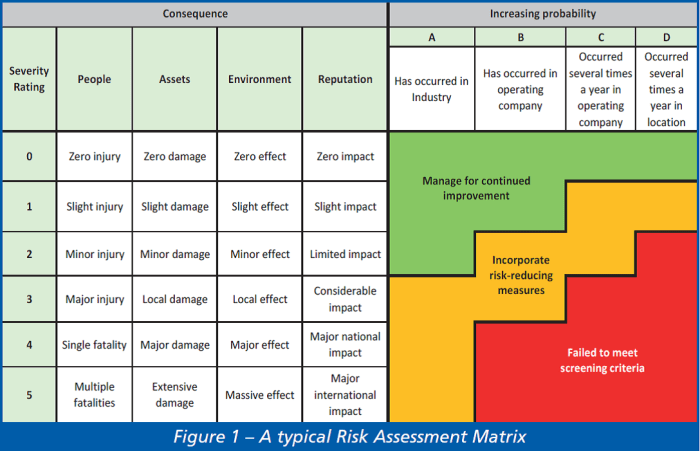
Embark on a journey through the world of risk assessment matrix, a powerful tool that simplifies risk evaluation and aids in informed decision-making. Delve into the intricacies of risk analysis and discover how organizations can enhance their risk management processes with this essential framework.
Risk Assessment Matrix
Risk assessment matrix is a crucial tool used in risk management processes to systematically evaluate and prioritize risks based on their likelihood and impact. By categorizing risks in a matrix format, organizations can effectively identify potential threats and develop appropriate mitigation strategies.
Purpose of a Risk Assessment Matrix
A risk assessment matrix serves as a visual representation of risks, allowing stakeholders to better understand the level of risk associated with each identified threat. This enables organizations to prioritize their resources and focus on addressing high-risk areas to prevent potential negative outcomes.
Components of a Risk Assessment Matrix
Likelihood
The probability of a risk event occurring.
Impact
The potential consequences or severity of a risk event.
Risk Level
The combination of likelihood and impact, categorized into low, medium, and high risk levels.
Mitigation Strategies
Action plans to reduce or eliminate risks based on their risk levels.
Examples of Risk Levels in a Risk Assessment Matrix
- Low Risk: Risks with minimal impact and low likelihood of occurrence, often requiring monitoring but not immediate action.
- Medium Risk: Risks with moderate impact and likelihood, requiring proactive measures to mitigate potential consequences.
- High Risk: Risks with significant impact and high likelihood, necessitating immediate action and comprehensive risk management strategies.
Importance of Using a Risk Assessment Matrix
A risk assessment matrix provides a structured approach to risk management, enabling organizations to:
- Prioritize risks based on their potential impact and likelihood.
- Allocate resources effectively to address high-risk areas.
- Identify gaps in risk mitigation strategies and develop targeted action plans.
- Enhance decision-making by providing a clear overview of risks and their potential consequences.
Risk Assessment
Risk assessment is a crucial process in which organizations identify, analyze, and evaluate potential risks that could affect their operations, projects, or objectives. It involves assessing the likelihood of a risk occurring and the potential impact it may have on the organization.
Steps in Conducting a Risk Assessment
When conducting a risk assessment, organizations typically follow a structured approach that involves several key steps:
- Identifying Risks: This step involves identifying all potential risks that could impact the organization. This could include risks related to finances, operations, compliance, reputation, etc.
- Analyzing Risks: Once risks are identified, they are analyzed to understand their causes, potential consequences, and the likelihood of occurrence. This helps in prioritizing risks based on their severity.
- Evaluating Risks: Risks are then evaluated based on their potential impact on the organization’s objectives. This step helps in determining the level of risk tolerance and deciding on risk mitigation strategies.
Tools and Methodologies in Risk Assessment
Organizations utilize various tools and methodologies to conduct risk assessments effectively. Some common tools and methodologies include:
- Risk Assessment Matrix: A matrix that helps in categorizing risks based on their likelihood and impact, allowing organizations to prioritize risks for mitigation.
- SWOT Analysis: A strategic planning tool that helps in identifying an organization’s strengths, weaknesses, opportunities, and threats, which can be used to assess risks.
- Failure Mode and Effects Analysis (FMEA): A systematic approach to identifying and preventing potential failures in processes, products, or systems by analyzing their effects.
- Scenario Analysis: A technique that involves assessing different scenarios and their potential impact on the organization, helping in preparing for various risks.
Risk Management

Risk management is a crucial process in organizational decision-making as it involves identifying, assessing, and prioritizing risks to minimize their impact on the achievement of objectives. By effectively managing risks, organizations can better navigate uncertainties and make informed choices to protect their assets, reputation, and overall success.
Different Strategies for Managing Risks Effectively
- Preventive Measures: Implementing controls and safeguards to reduce the likelihood of risks occurring.
- Risk Transfer: Sharing risks with external parties through insurance or contractual agreements.
- Risk Mitigation: Taking actions to lessen the impact of identified risks if they materialize.
- Risk Avoidance: Eliminating activities or decisions that pose high risks to the organization.
Role of Risk Management in Achieving Organizational Objectives
Risk management processes play a vital role in helping organizations achieve their objectives by providing a structured approach to identifying potential threats and opportunities. By assessing risks systematically and implementing appropriate strategies, organizations can proactively address challenges and capitalize on favorable outcomes, ultimately driving success and growth.
Enhancing Organizational Resilience through Risk Management
Risk management is instrumental in enhancing organizational resilience by enabling companies to anticipate, prepare for, and respond to risks effectively. By building a culture of risk awareness and readiness, organizations can adapt to changing circumstances, recover from setbacks, and emerge stronger in the face of adversity.
Risk Tolerance
Risk tolerance is the level of risk exposure that an organization is willing to accept or withstand in pursuit of its objectives. It is a crucial aspect of risk management as it helps organizations determine the amount of risk they are comfortable taking on in order to achieve their goals.
Significance of Risk Tolerance
Determining risk tolerance is essential for organizations to make informed decisions regarding risk management strategies. By understanding their risk tolerance levels, organizations can establish appropriate risk mitigation measures and allocate resources effectively to manage potential risks.
- It guides organizations in setting risk management priorities.
- It helps in identifying and evaluating potential risks that align with organizational objectives.
- It enables organizations to balance risk-taking with risk mitigation efforts.
Relationship Between Risk Tolerance and Risk Appetite
Risk tolerance is closely related to risk appetite, which refers to the amount of risk an organization is willing to take in order to achieve its strategic objectives. While risk appetite defines the willingness to take risks, risk tolerance sets the boundaries within which risks are acceptable to the organization.
“Risk appetite is the amount of risk an organization is willing to take, while risk tolerance is the level of risk the organization can handle.”
Influence on Decision-Making
Risk tolerance plays a significant role in influencing decision-making within organizations. It affects how organizations assess and respond to risks, prioritize risk management activities, and determine the allocation of resources.
- High risk tolerance may lead to more aggressive decision-making and pursuit of opportunities with higher potential returns.
- Low risk tolerance may result in a more conservative approach, focusing on minimizing risks even if it means sacrificing potential gains.
- Risk tolerance also impacts the level of risk acceptance in various business operations and projects.
In conclusion, the risk assessment matrix serves as a cornerstone in risk management, offering a structured approach to identifying, assessing, and mitigating risks. By integrating this tool into organizational processes, businesses can bolster their resilience and achieve their objectives with confidence.
FAQ Guide
What is the purpose of a risk assessment matrix?
The purpose of a risk assessment matrix is to categorize and prioritize risks based on their likelihood and impact, enabling organizations to focus on critical areas.
How do organizations determine their risk tolerance levels?
Organizations determine their risk tolerance levels by evaluating their capacity to withstand potential risks and setting thresholds for acceptable risk exposure.
What is the relationship between risk tolerance and risk appetite?
Risk tolerance reflects the level of risk an organization is willing to accept, while risk appetite defines the amount of risk the organization is willing to take to achieve its objectives.


