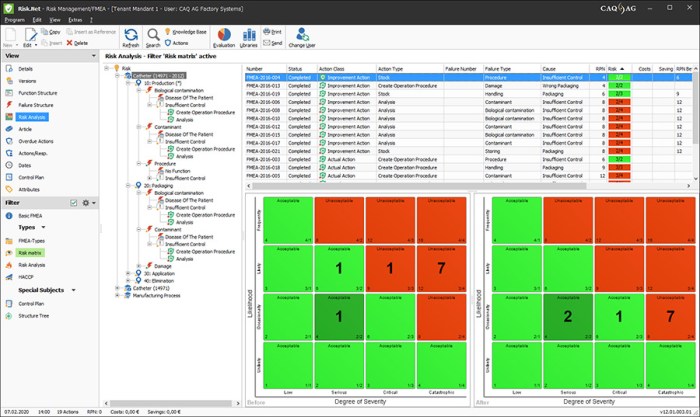
With Risk assessment software at the forefront, this paragraph opens a window to an amazing start and intrigue, inviting readers to embark on a storytelling filled with unexpected twists and insights.
Risk assessment software plays a crucial role in modern-day risk management, revolutionizing how organizations identify, assess, and mitigate potential risks. As industries evolve, the need for efficient risk assessment tools becomes increasingly apparent, making this software a game-changer in ensuring business continuity and success.
Introduction to Risk Assessment Software
Risk assessment software is a tool designed to help organizations identify, assess, and prioritize potential risks that could impact their operations. It involves analyzing various factors to determine the likelihood and impact of risks, allowing businesses to make informed decisions to mitigate or manage these risks effectively.
Using risk assessment software is crucial in various industries to proactively manage risks and reduce the chances of financial losses, reputation damage, or regulatory non-compliance. By leveraging this technology, organizations can enhance their risk management processes, improve decision-making, and ultimately safeguard their assets and stakeholders.
How Risk Assessment Software Helps in Identifying, Assessing, and Prioritizing Risks
- Facilitates the systematic identification of potential risks across different areas of an organization.
- Enables the assessment of risks based on their probability of occurrence and potential impact on business objectives.
- Supports the prioritization of risks by analyzing their severity and likelihood, allowing organizations to focus on addressing high-priority risks first.
- Provides a centralized platform for documenting risk assessments, making it easier to track and monitor risk mitigation efforts over time.
- Offers customizable risk assessment templates and tools to streamline the risk management process and ensure consistency in risk evaluation.
Features of Risk Assessment Software
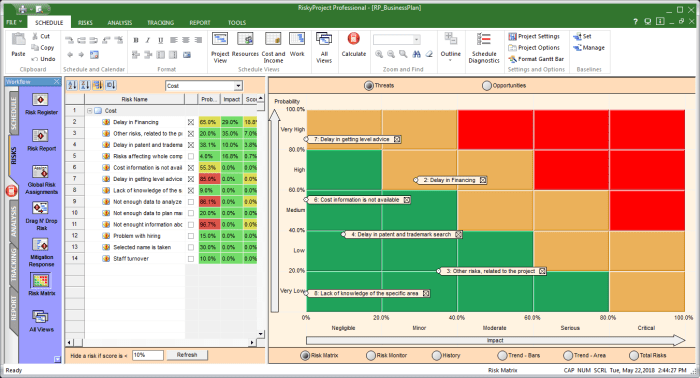
Risk assessment software comes with a variety of features that are essential for conducting thorough risk assessments in various industries. These features are designed to streamline the risk assessment process and ensure that all potential risks are identified and addressed effectively.
Key Features of Risk Assessment Software:
- Customizable Risk Assessment Templates: Risk assessment software typically offers customizable templates that can be tailored to specific industries or projects, allowing users to focus on relevant risk factors.
- Real-Time Risk Monitoring: These tools provide real-time monitoring of risks, enabling timely updates and adjustments to risk mitigation strategies as needed.
- Risk Scoring and Prioritization: The software assigns scores to identified risks based on factors such as likelihood and impact, helping users prioritize risks for mitigation efforts.
- Collaboration and Communication Tools: Many risk assessment software solutions include features for team collaboration, enabling multiple stakeholders to contribute insights and feedback on risk assessments.
- Integration Capabilities: Some software tools can integrate with other systems, such as project management software, to streamline the risk assessment process and ensure seamless data flow.
- Reporting and Documentation: Risk assessment software generates comprehensive reports and documentation, providing stakeholders with detailed insights into identified risks and mitigation strategies.
How These Features Aid in Conducting Comprehensive Risk Assessments:
The customizable templates and risk scoring features help users identify and prioritize risks effectively, while real-time monitoring and collaboration tools ensure that the risk assessment process is dynamic and inclusive of diverse perspectives. Integration capabilities and robust reporting features further enhance the efficiency and accuracy of risk assessments.
Comparison of Different Risk Assessment Software Tools:
| Software Tool | Key Features | Integration Capabilities | Collaboration Tools |
|---|---|---|---|
| Tool A | Customizable templates, real-time monitoring | Integration with project management software | Team collaboration features |
| Tool B | Risk scoring, reporting and documentation | Integration with CRM systems | Collaborative risk assessment workflows |
| Tool C | Comprehensive risk libraries, risk prioritization | Integration with financial software | Real-time chat and commenting |
Benefits of Using Risk Assessment Software
Risk assessment software offers numerous advantages over traditional risk assessment methods, providing organizations with more efficient and effective ways to manage and mitigate risks. By automating the process and centralizing data, risk assessment software streamlines operations and enhances decision-making processes.
Improved Accuracy and Consistency
- Risk assessment software eliminates human error and bias, ensuring a more accurate and consistent evaluation of risks across the organization.
- By using predefined templates and algorithms, organizations can standardize risk assessment processes and reduce variability in results.
Time and Cost Savings
- Automating risk assessments through software significantly reduces the time and resources required to conduct assessments manually.
- Organizations can save costs associated with manual data collection, analysis, and reporting, allowing them to allocate resources more efficiently.
Enhanced Reporting and Visualization
- Risk assessment software provides customizable reporting features that allow organizations to generate detailed reports and visualizations of risk data.
- Through interactive dashboards and graphs, stakeholders can easily interpret and communicate risk information, facilitating better decision-making.
Integration and Collaboration
- Many risk assessment software solutions offer integration capabilities with other tools and systems, enabling seamless collaboration and data sharing across departments.
- Teams can work together in real-time, enhancing communication and coordination in identifying and addressing risks proactively.
Integration and Compatibility
When it comes to risk assessment software, integration and compatibility play a crucial role in ensuring seamless operations within an organization. The ability of the software to work harmoniously with existing systems and platforms can enhance efficiency and effectiveness in managing risks.
Integration with Other Systems
- Risk assessment software can integrate with project management tools to streamline risk identification and mitigation processes. For example, integrating risk assessment software with tools like JIRA or Trello can help in tracking and managing risks in real-time.
- Integration with compliance software can ensure that risk assessments are aligned with regulatory requirements. This can help organizations in staying compliant with industry standards and regulations.
Compatibility with Existing Tools
- Compatibility with Microsoft Office Suite allows for easy data import and export, making it convenient for users to work with familiar tools.
- Integration with cloud platforms like Google Drive or Dropbox enables secure storage and access to risk assessment data from anywhere, enhancing collaboration among team members.
Examples of Successful Integration
- A construction company successfully integrated risk assessment software with Building Information Modeling (BIM) tools to identify potential risks in building design and construction phases.
- A financial institution integrated risk assessment software with customer relationship management (CRM) systems to assess risks associated with client transactions and financial activities.
Customization and Flexibility
Customization options play a crucial role in risk assessment software as they allow users to tailor the software to their specific needs and requirements. This flexibility can significantly enhance the user experience and overall effectiveness of the risk management process.
Importance of Customization Options
- Customization options enable users to configure the software according to their organizational structure, risk management framework, and specific industry requirements.
- Users can personalize dashboards, reports, and risk assessments to focus on the most relevant information for their decision-making processes.
- Customization fosters user engagement and adoption as individuals feel more ownership and control over the software, leading to increased efficiency and accuracy in risk assessments.
Flexibility in Software Settings
- Flexible software settings allow users to adjust risk assessment parameters, scoring criteria, and risk tolerance levels based on changing business conditions or evolving risk profiles.
- Users can easily modify workflows, approval processes, and notification settings to align with their organization’s risk management practices and compliance requirements.
- Flexibility in software settings empowers users to respond promptly to emerging risks, adapt to market dynamics, and optimize risk mitigation strategies in real-time.
Examples of Customizable Features
- Customizable risk assessment templates that can be tailored to address specific risk categories, such as strategic, financial, operational, or compliance risks.
- Ability to create custom risk matrices, heat maps, and risk registers to visualize and prioritize risks according to their likelihood and impact on business objectives.
- Personalized user roles and permissions to control access to sensitive risk data, assign responsibilities, and streamline collaboration among cross-functional teams.
Risk Management Strategies
Risk management strategies are essential for organizations to identify, assess, and mitigate potential risks that could impact their operations. When used in conjunction with risk assessment software, these strategies become more efficient and effective in managing risks. Risk assessment software plays a crucial role in helping organizations implement and monitor risk management strategies by providing a centralized platform to track and analyze risks in real-time.
By integrating risk assessment data with risk management strategies, organizations can make informed decisions to mitigate risks promptly.
Common Risk Management Strategies
- Risk Avoidance: Organizations may choose to avoid certain risks altogether by not engaging in activities that pose those risks.
- Risk Mitigation: Implementing measures to reduce the likelihood or impact of identified risks.
- Risk Transfer: Transferring the risk to another party, such as through insurance or contractual agreements.
- Risk Acceptance: Acknowledging the risk and deciding to accept the potential consequences without taking specific actions to mitigate it.
Role of Risk Assessment Software in Developing Proactive Risk Management Plans
Risk assessment software enables organizations to develop proactive risk management plans by providing tools to identify, prioritize, and analyze risks. By leveraging the data and insights generated by the software, organizations can create comprehensive risk management strategies that address potential threats effectively. The software facilitates the continuous monitoring of risks, allowing organizations to adapt their risk management plans in real-time to changing circumstances.
Overall, risk assessment software empowers organizations to take a proactive approach to risk management and enhance their resilience against potential threats.
Risk Tolerance and Risk Appetite
Understanding the concepts of risk tolerance and risk appetite is crucial for organizations when it comes to managing risks effectively.
Definition and Differentiation
Risk tolerance refers to the level of risk exposure that an organization is willing to accept in pursuit of its objectives. On the other hand, risk appetite is the amount and type of risk that an organization is prepared to take to achieve its goals, considering factors such as financial capacity, industry regulations, and stakeholder expectations.
Role of Risk Assessment Software
Risk assessment software plays a vital role in helping organizations determine their risk tolerance levels by providing comprehensive risk analysis, identifying potential threats, and assessing the likelihood and impact of risks on business operations. By utilizing advanced analytics and scenario modeling, organizations can evaluate different risk scenarios and their potential consequences, thus enabling them to make informed decisions based on their risk appetite.
Impact on Decision-making and Risk Management
The understanding of risk tolerance and risk appetite significantly influences decision-making processes and risk management strategies within an organization. By aligning risk exposure with the organization’s risk appetite, decision-makers can prioritize risks, allocate resources effectively, and establish appropriate risk mitigation measures to achieve strategic objectives while managing uncertainties.
Reporting and Analytics
Reporting capabilities in risk assessment software play a crucial role in helping organizations make informed decisions based on data-driven insights. By generating detailed reports and providing advanced analytics features, risk assessment software enables businesses to enhance their risk management practices effectively.
Reporting Capabilities
- Customizable Reports: Risk assessment software allows users to create custom reports tailored to their specific needs and requirements.
- Real-time Data Visualization: The software offers real-time data visualization tools that help users analyze risk information quickly and efficiently.
- Comprehensive Risk Reports: Generated reports provide a comprehensive overview of the organization’s risk landscape, highlighting potential threats and vulnerabilities.
Analytics Features
- Data Mining and Pattern Recognition: Analytics features in risk assessment software help in identifying patterns and trends within risk data, enabling proactive risk mitigation strategies.
- Predictive Analytics: By leveraging predictive analytics, organizations can anticipate potential risks and take preventive measures to minimize their impact.
- Performance Metrics: Analytics tools provide performance metrics that allow businesses to track the effectiveness of their risk management strategies over time.
Utilizing Reports for Improved Risk Management
- Risk Identification: Reports generated by risk assessment software aid in identifying and prioritizing risks based on their potential impact on the organization.
- Decision Making: The insights from analytics reports help in making data-driven decisions regarding risk mitigation strategies and resource allocation.
- Continuous Improvement: Regularly analyzing reports can help organizations refine their risk management practices and implement continuous improvement initiatives.
In conclusion, Risk assessment software emerges as a powerful ally in navigating the complex landscape of risks that businesses face. By harnessing its capabilities, organizations can proactively manage uncertainties, make informed decisions, and ultimately thrive in a risk-prone environment.
FAQ Compilation
How does risk assessment software differ from traditional methods?
Risk assessment software offers automation, real-time data analysis, and customizable features that traditional methods lack, enhancing accuracy and efficiency.
Can risk assessment software be integrated with existing tools?
Yes, most risk assessment software can be seamlessly integrated with various systems and platforms for enhanced functionality and data sharing.
What role does risk tolerance play in risk management strategies?
Risk tolerance defines an organization’s willingness to accept risks, and risk assessment software helps in determining these thresholds for informed decision-making.


