
Embark on a journey to explore the nuanced differences between risk tolerance and risk capacity in the realm of financial planning and decision-making. As we delve into this intricate topic, you’ll gain a deeper understanding of how these concepts shape investment strategies and risk management practices.
Risk Tolerance vs Risk Capacity
Risk tolerance and risk capacity are crucial concepts in the realm of financial planning. Understanding the differences between these two terms is essential for making informed investment decisions.
Risk Tolerance
Risk tolerance refers to an individual’s willingness and ability to endure fluctuations in the value of their investments. It is influenced by various factors such as age, financial goals, investment knowledge, and emotional temperament. A high-risk tolerance indicates a greater comfort with market volatility, while a low-risk tolerance suggests a preference for more stable investments.
Risk Capacity
On the other hand, risk capacity is the level of risk an individual can afford to take based on their financial circumstances, goals, and time horizon. It considers factors like income, assets, liabilities, and overall financial situation. A high-risk capacity implies a greater ability to withstand potential losses, while a low-risk capacity indicates a need for more conservative investment strategies.
Interrelation in Investment Decision-Making
Risk tolerance and risk capacity are interconnected in the investment decision-making process. While risk tolerance reflects an investor’s psychological willingness to take on risk, risk capacity assesses their financial ability to do so. It is essential to align these two factors to ensure that investment strategies are both suitable and sustainable in achieving financial objectives.
Risk Assessment
Risk assessment is a crucial process in identifying and evaluating potential threats that may impact an organization’s operations, assets, or objectives. By conducting a thorough risk assessment, businesses can understand the risks they face and take proactive measures to mitigate them effectively.
Tools and Methodologies for Risk Assessment
Risk assessment can be performed using various tools and methodologies across different industries. Some common methods include:
- Quantitative Risk Analysis: This method involves assigning numerical values to risks based on probability and impact, allowing for a more precise assessment.
- Qualitative Risk Assessment: This approach focuses on identifying and prioritizing risks based on subjective judgments and expert opinions.
- SWOT Analysis: Strengths, Weaknesses, Opportunities, and Threats (SWOT) analysis helps organizations assess internal and external factors that may pose risks.
- Fault Tree Analysis: This method is used to analyze potential causes of risks and their interrelationships in complex systems.
Role of Risk Assessment in Risk Management
Risk assessment plays a critical role in developing effective risk management strategies by:
- Identifying Potential Risks: By evaluating and analyzing risks, organizations can identify potential threats to their operations and make informed decisions.
- Prioritizing Risks: Risk assessment helps prioritize risks based on their likelihood and impact, allowing organizations to focus on addressing the most critical issues first.
- Allocating Resources: By understanding the level of risk associated with different scenarios, organizations can allocate resources effectively to manage and mitigate risks.
- Monitoring and Reviewing: Regular risk assessments enable organizations to monitor changes in risk profiles and adapt their risk management strategies accordingly.
Risk Management
Risk management is a crucial process that involves identifying, assessing, and prioritizing risks followed by coordinating and monitoring the necessary resources to minimize, control, and mitigate the impact of these risks. By effectively managing risks, organizations can enhance their ability to achieve their objectives and protect their assets.
Key Components of Risk Management
- Risk Identification: This involves identifying potential risks that could impact the organization’s objectives or projects.
- Risk Assessment: Once risks are identified, they are assessed in terms of likelihood and impact to prioritize them for treatment.
- Risk Treatment: This step involves choosing the appropriate strategies to manage risks, such as risk avoidance, risk reduction, risk transfer, or risk acceptance.
- Monitoring and Review: Continuous monitoring and reviewing of risk management processes are essential to ensure they remain effective and relevant.
Types of Risk Management Strategies
- Risk Avoidance: This strategy involves avoiding activities or situations that could lead to risks.
- Risk Reduction: Risk reduction aims to minimize the likelihood or impact of risks through preventive measures.
- Risk Transfer: Risk transfer involves shifting the impact of risks to another party, such as through insurance or outsourcing.
- Risk Acceptance: In some cases, organizations may choose to accept certain risks if the cost of mitigation outweighs the potential impact.
Importance of Monitoring and Reviewing Risk Management Processes
Monitoring and reviewing risk management processes are vital for ensuring the effectiveness of risk mitigation strategies. Regular assessments help in identifying new risks, evaluating the performance of existing controls, and making necessary adjustments to enhance the overall risk management framework.
Risk Tolerance
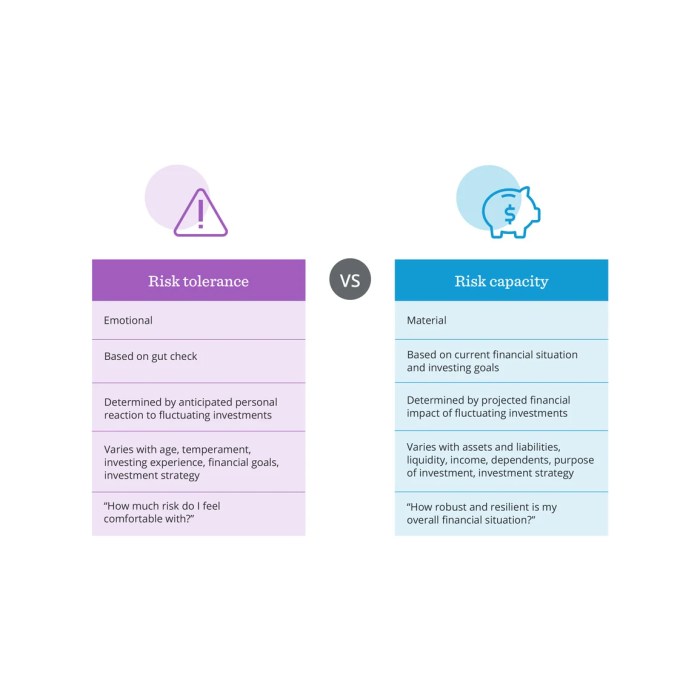
Risk tolerance refers to an individual’s willingness to take on risk in their investment or decision-making process. It plays a crucial role in determining the level of risk one is comfortable with and can withstand.
Factors Influencing Individual Risk Tolerance Levels
- Personal financial goals: Individuals with long-term financial goals may have a higher risk tolerance as they have more time to recover from any losses.
- Age and stage of life: Younger individuals may have a higher risk tolerance as they have more time to recover from losses compared to those nearing retirement.
- Income and wealth: Those with higher income or wealth may have a higher risk tolerance as they can afford to take on more risk.
- Knowledge and experience: Individuals with a deeper understanding of investments and risk may have a higher risk tolerance.
Real-Life Examples Illustrating How Risk Tolerance Impacts Decision-Making
- An individual with a high risk tolerance may choose to invest a significant portion of their savings in high-risk, high-reward stocks, aiming for higher returns.
- Conversely, someone with a low risk tolerance may prefer safer investments like bonds or savings accounts, even if the returns are lower.
Strategies for Assessing and Adjusting Risk Tolerance Based on Changing Circumstances
- Regularly review and reassess your financial goals and risk tolerance to ensure they align.
- Consult with a financial advisor to help determine an appropriate level of risk based on your current financial situation.
- Consider diversifying your investments to manage risk while still achieving your financial goals.
Risk Capacity
Risk capacity is a crucial concept in financial planning and investment management that refers to the amount of risk an individual, business, or organization can afford to take on based on their financial resources, goals, and constraints.
Comparison of Risk Capacity
- Individuals: For individuals, risk capacity is determined by factors such as income, savings, expenses, and financial goals. Younger individuals with stable income and long-term investment goals typically have a higher risk capacity compared to retirees or those with limited income.
- Businesses: In the context of businesses, risk capacity is influenced by factors like cash flow, debt levels, market position, and growth prospects. Established businesses with strong cash reserves and diversified revenue streams tend to have a higher risk capacity.
- Organizations: Risk capacity for organizations is influenced by factors such as funding sources, budget allocation, reserves, and strategic priorities. Non-profit organizations, for example, may have a lower risk capacity compared to for-profit enterprises due to their reliance on donations and grants.
Enhancing Risk Capacity
One effective way to enhance risk capacity is through diversification and strategic planning. Diversification involves spreading investments across different asset classes, industries, and geographic regions to reduce overall risk exposure. Strategic planning, on the other hand, helps in aligning financial resources with long-term goals and establishing risk management mechanisms to mitigate potential threats.
In conclusion, the dynamic interplay between risk tolerance and risk capacity underscores the complexity of risk management in various contexts. By grasping these distinctions, individuals and organizations can make more informed choices to navigate the ever-changing landscape of financial risks.
Top FAQs
What factors influence individual risk tolerance levels?
Factors such as financial goals, time horizon, and personal comfort with risk play a significant role in determining an individual’s risk tolerance.
How can risk capacity be enhanced?
Risk capacity can be improved through diversification of investments, strategic planning, and a thorough understanding of financial goals.


