Embark on a journey through ISO 31000 risk management, diving deep into its core concepts and practical applications. This engaging introduction sets the stage for a thorough exploration of risk management standards and practices.
Explore the fundamental principles of ISO 31000 and how they shape risk management strategies for organizations worldwide.
Introduction to ISO 31000 Risk Management
ISO 31000 is an international standard that provides guidelines and principles for effective risk management. It is designed to help organizations identify, assess, and manage risks in a systematic and structured manner. By implementing ISO 31000, businesses can enhance their decision-making processes and improve overall performance.ISO 31000 plays a significant role in standardizing risk management practices across various industries and sectors.
It provides a common framework that enables organizations to develop a robust risk management strategy that aligns with their objectives and goals. This standard helps in creating a risk-aware culture within an organization, fostering transparency and accountability in risk-related activities.
Key Principles of ISO 31000
- Integration: Risk management should be integrated into all organizational processes and functions to ensure a comprehensive approach.
- Structured approach: Organizations need to follow a structured methodology for identifying, assessing, and treating risks effectively.
- Risk assessment: Regular risk assessments are essential to understand the potential impact of risks and develop appropriate response strategies.
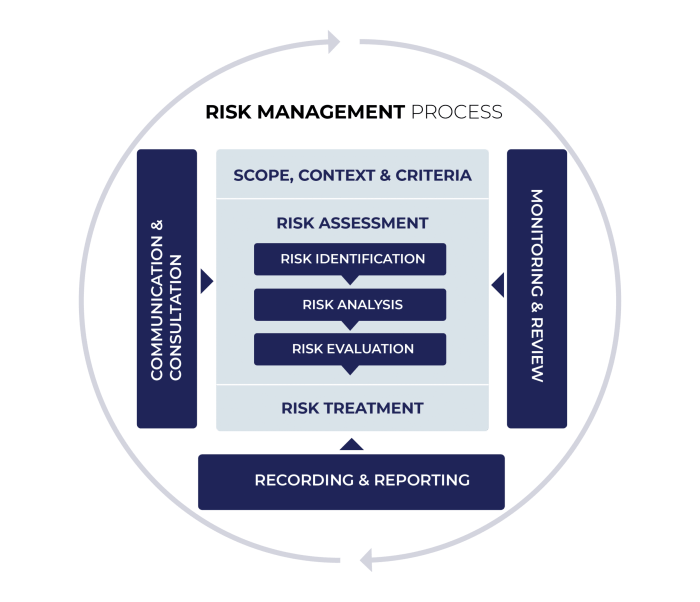
- Communication and consultation: Open communication and consultation with stakeholders are crucial for effective risk management.
- Monitoring and review: Continuous monitoring and review of risks and risk management processes are necessary to adapt to changing circumstances.
Risk Assessment in ISO 31000
Risk assessment is a crucial component of ISO 31000, providing organizations with a systematic approach to identifying, analyzing, and evaluating risks that may impact their objectives. By following the guidelines set forth in ISO 31000, organizations can effectively manage risks and make informed decisions to enhance their overall performance and resilience.
Process of Risk Assessment
Risk assessment in ISO 31000 involves a structured approach that includes the following steps:
- Identification of risks: Organizations need to identify potential risks that could affect the achievement of their objectives. This step requires a thorough understanding of internal and external factors that may pose a threat.
- Analysis of risks: Once risks are identified, organizations need to analyze the likelihood and potential impact of each risk. This analysis helps prioritize risks based on their significance and likelihood of occurrence.
- Evaluation of risks: In this step, organizations assess the overall risk profile by considering the results of the risk analysis. By evaluating risks, organizations can determine the most critical areas that require immediate attention and mitigation strategies.
Tools and Techniques for Risk Assessment
ISO 31000 recommends the use of various tools and techniques to facilitate the risk assessment process, including:
- Brainstorming sessions: Engaging key stakeholders in brainstorming sessions can help identify a wide range of risks and perspectives within the organization.
- SWOT analysis: Assessing the organization’s strengths, weaknesses, opportunities, and threats can provide valuable insights into potential risks and opportunities for improvement.
- Interviews and surveys: Gathering feedback from employees, customers, and other stakeholders through interviews and surveys can help uncover hidden risks and vulnerabilities.
- Risk registers: Maintaining a comprehensive risk register to document identified risks, their potential impact, and mitigation strategies can help organizations track and manage risks effectively.
Risk Management Framework in ISO 31000
Establishing a robust risk management framework is essential for organizations to effectively identify, assess, and mitigate risks. The ISO 31000 standard provides a comprehensive framework that Artikels the principles, framework, and process for managing risk.
Components of the Risk Management Framework
- The establishment of a risk management policy to define the organization’s approach to risk management.
- Identification of risk management objectives that align with the organization’s overall goals and strategies.
- Implementation of risk identification, assessment, and treatment processes to address risks effectively.
- Continuous monitoring and review of the risk management framework to ensure its effectiveness and relevance.
Importance of Establishing Risk Management Policies and Objectives
Developing clear risk management policies helps organizations set the tone for risk management practices across all levels. By establishing risk management objectives, organizations can align their risk management efforts with their strategic objectives, ensuring that risks are managed in a manner that supports the achievement of organizational goals.
Implementing the Risk Management Framework for Enhanced Decision-Making
- Integrating risk management into decision-making processes helps organizations make informed decisions by considering potential risks and opportunities.
- By utilizing the risk management framework, organizations can prioritize risks based on their potential impact and likelihood, enabling them to allocate resources efficiently.
- Regularly reviewing and updating the risk management framework ensures that it remains relevant and effective in addressing the evolving risk landscape.
Risk Tolerance and Risk Appetite
Risk tolerance and risk appetite are crucial concepts in the context of ISO 31000 risk management. Risk tolerance refers to the acceptable level of variation an organization is willing to withstand in achieving its objectives, while risk appetite represents the amount and type of risk that an organization is willing to pursue or retain to achieve its goals.
Differentiation between Risk Tolerance and Risk Appetite
- Risk tolerance focuses on the organization’s ability to handle risk and its willingness to accept deviations from its objectives.
- Risk appetite, on the other hand, deals with the organization’s willingness to take risks to achieve its strategic objectives.
- While risk tolerance sets boundaries for risk-taking, risk appetite defines the organization’s attitude towards risk and its desired level of risk exposure.
Setting Risk Tolerance Levels
Setting risk tolerance levels involves a systematic approach that aligns with the organization’s objectives and risk management strategies. Organizations can set risk tolerance levels by:
- Conducting thorough risk assessments to identify potential risks and their potential impact on objectives.
- Defining clear risk criteria that specify the acceptable level of risk exposure for different types of risks.
- Establishing communication channels to ensure all stakeholders understand and adhere to the defined risk tolerance levels.
- Regularly reviewing and updating risk tolerance levels based on changes in the organization’s objectives, external environment, and risk landscape.
In conclusion, ISO 31000 risk management offers a structured approach to identifying, assessing, and mitigating risks, ensuring business resilience and continuity. By adhering to ISO 31000 guidelines, organizations can proactively manage uncertainties and achieve their objectives effectively.
Helpful Answers
What is the significance of ISO 31000 in risk management?
ISO 31000 provides a framework for organizations to effectively manage risks, enhancing decision-making processes and promoting a culture of risk awareness.
How does ISO 31000 define risk tolerance and risk appetite?
Risk tolerance refers to the acceptable level of risk exposure that an organization is willing to take, while risk appetite defines the amount of risk an organization is prepared to seek or retain.
What are some examples of tools recommended by ISO 31000 for risk assessment?
ISO 31000 suggests tools like risk registers, risk matrices, and scenario analysis to facilitate the identification and evaluation of risks within an organization.


