As Project risk management takes center stage, this opening passage beckons readers into a world crafted with good knowledge, ensuring a reading experience that is both absorbing and distinctly original.
Risk management is a crucial aspect of project success, and understanding how to navigate potential risks can make or break a project’s outcome. In this comprehensive guide, we will delve into the intricacies of project risk management, exploring its significance, strategies, and impact on decision-making in a project setting.
Overview of Project Risk Management
Project risk management involves identifying, assessing, and mitigating potential risks that could impact the successful completion of a project. By proactively managing risks, project managers can increase the likelihood of meeting project objectives within the defined constraints of time, budget, and scope.
Importance of Project Risk Management
Effective project risk management is crucial for ensuring successful project delivery. It helps project teams anticipate and address potential challenges before they escalate, reducing the likelihood of project delays, cost overruns, or failure to meet stakeholder expectations.
- Uncertain market conditions affecting project profitability
- Resource constraints leading to delays in project timeline
- Technological failures impacting project implementation
- Changes in regulatory requirements affecting project compliance
Difference between Project Risk Management and General Risk Management
Project risk management focuses specifically on risks related to a particular project, taking into account the unique objectives, constraints, and stakeholders involved. On the other hand, general risk management addresses risks across an organization or business, considering broader strategic objectives and operational risks that may impact multiple projects or functions.
Risk Assessment in Project Management
Risk assessment in project management refers to the process of identifying, analyzing, and evaluating potential risks that could impact the successful completion of a project. By conducting a thorough risk assessment, project managers can proactively address and mitigate risks, ultimately increasing the likelihood of project success.
Identifying Risks
- Brainstorming sessions with project team members and stakeholders to identify potential risks.
- Reviewing historical data from similar projects to identify common risks.
- Using checklists and templates to systematically identify risks based on project scope, objectives, and constraints.
Analyzing Risks
- Assessing the probability of each identified risk occurring and the potential impact on project objectives.
- Prioritizing risks based on their likelihood and impact to focus on high-priority risks.
- Utilizing qualitative and quantitative risk analysis techniques to evaluate risks in more detail.
Tools and Techniques
- SWOT analysis – examining project strengths, weaknesses, opportunities, and threats.
- Expected Monetary Value (EMV) analysis – calculating the expected value of each risk to make informed decisions.
- Decision trees – visualizing potential decision outcomes and associated risks to aid in decision-making.
Benefits of Conducting Risk Assessments
- Enhanced decision-making by identifying potential risks and their impact on project objectives.
- Improved project planning and resource allocation to address and mitigate risks effectively.
- Increased stakeholder confidence by demonstrating proactive risk management efforts.
Risk Management Strategies
When it comes to project management, implementing effective risk management strategies is crucial to ensure the success of a project. These strategies help in identifying potential risks, analyzing their impact, and developing plans to mitigate or eliminate them. In this section, we will delve into different risk management strategies used in project management, comparing proactive and reactive approaches, discussing the development and implementation of risk management plans, and providing real-world examples of successful strategies.
Proactive vs. Reactive Risk Management
Proactive risk management involves identifying and addressing risks before they occur, focusing on prevention rather than reaction. This approach allows project managers to anticipate potential issues and take preventive measures to minimize their impact. On the other hand, reactive risk management deals with risks as they arise, responding to issues after they have occurred. While proactive risk management is considered more effective in avoiding problems, reactive strategies are essential for addressing unexpected challenges.
Development and Implementation of Risk Management Plans
Risk management plans are developed by assessing potential risks, analyzing their likelihood and impact, and prioritizing them based on their significance. These plans Artikel strategies for managing risks, assigning responsibilities, establishing risk tolerance levels, and defining monitoring and control mechanisms. Once developed, risk management plans are implemented by integrating risk mitigation strategies into project activities, continuously monitoring risks, and adapting plans as needed to address changing circumstances.
Examples of Successful Risk Management Strategies
In real-world projects, successful risk management strategies have played a crucial role in ensuring project success. For example, the construction of a skyscraper in a seismic zone may involve proactive risk management strategies such as conducting thorough structural assessments, using advanced building materials, and implementing strict safety protocols to minimize the risk of earthquakes. Another example could be a software development project that adopts reactive risk management strategies by having backup systems in place to address unexpected system failures.
Risk Tolerance in Project Management
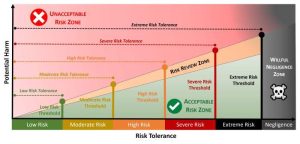
Risk tolerance refers to the level of risk that an organization or project team is willing to accept or bear during the course of a project. It plays a crucial role in project management as it influences decision-making processes and helps in determining the acceptable level of risk exposure.
Significance of Risk Tolerance
Risk tolerance impacts decision-making in projects by guiding the team on how much risk they are willing to take to achieve project objectives. It helps in prioritizing risks, making trade-offs between risk and reward, and ensuring that the project stays within acceptable risk limits.
- It helps in aligning risk management efforts with the overall objectives of the project.
- It enables project teams to make informed decisions about risk responses and mitigation strategies.
- It assists in setting clear boundaries for risk-taking, preventing unnecessary exposure to risks that could jeopardize project success.
Determining and Establishing Risk Tolerance Levels
Determining and establishing risk tolerance levels in a project involves a systematic approach that takes into account the organization’s risk appetite, project goals, stakeholders’ expectations, and industry standards. Some ways to determine and establish risk tolerance levels include:
- Conducting risk assessments to identify potential risks and their potential impact on the project.
- Engaging stakeholders to understand their risk preferences and thresholds.
- Using risk management frameworks and tools to quantify and analyze risks based on predefined criteria.
It is essential to find the right balance between risk-taking and risk-aversion to ensure that the project achieves its objectives without exposing the organization to undue risk.
Variation of Risk Tolerance Across Projects
Risk tolerance can vary across different types of projects depending on factors such as project complexity, industry regulations, stakeholder expectations, and the organization’s risk culture. For example:
- A high-tech research and development project may have a higher risk tolerance due to the innovative nature of the work and the potential for high rewards.
- A construction project in a highly regulated industry may have a lower risk tolerance to ensure compliance with safety standards and regulations.
- An infrastructure project funded by government agencies may have a moderate risk tolerance to balance public interest with financial constraints.
In conclusion, mastering the art of project risk management is key to achieving successful project outcomes. By implementing effective risk assessment techniques and adopting suitable risk management strategies, project managers can steer their projects towards success amidst uncertainties and challenges.
Commonly Asked Questions
What is the importance of project risk management?
Project risk management is crucial as it helps in identifying, assessing, and mitigating potential risks that could derail project success.
How does risk tolerance impact decision-making in projects?
Risk tolerance influences the level of risk a project team is willing to accept, which in turn affects decision-making processes throughout the project lifecycle.
What are some examples of successful risk management strategies in real-world projects?
Successful risk management strategies in real-world projects include proactive risk identification, effective communication among team members, and regular risk monitoring and reassessment.